




Table of Contents
Electric vehicle (EV) ownership is accelerating rapidly across the UK, yet for many drivers, particularly renters and those without off-street parking, charging remains a challenge.
To support its ambitious net-zero goals and growing EV adoption, the UK government has introduced a sweeping set of reforms aimed at making EV charging more accessible, fairer, and cost-effective for all. But are these changes truly transformative, or just reshuffling the existing barriers?
Let’s explore what these electric vehicle charging reforms mean for you, and how they might reshape the future of charging at home and in public.
What are the UK’s New Electric Vehicle Charging Reforms Aiming to Solve?
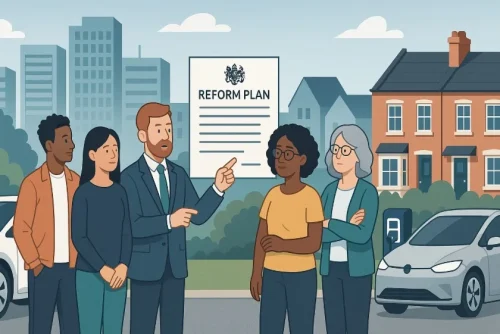
The key issue these reforms address is the lack of equitable access to EV charging. While homeowners with driveways have enjoyed the benefits of cheap, overnight home charging, millions of renters and residents of flats or terraced homes have not.
Planning regulations, application fees, and installation restrictions have placed the convenience of EV charging out of reach for a significant portion of the population.
The reforms aim to remove these longstanding hurdles. Central to the government’s plan is a cut in red tape, allowing more residents to install charging points with ease, especially those without private parking.
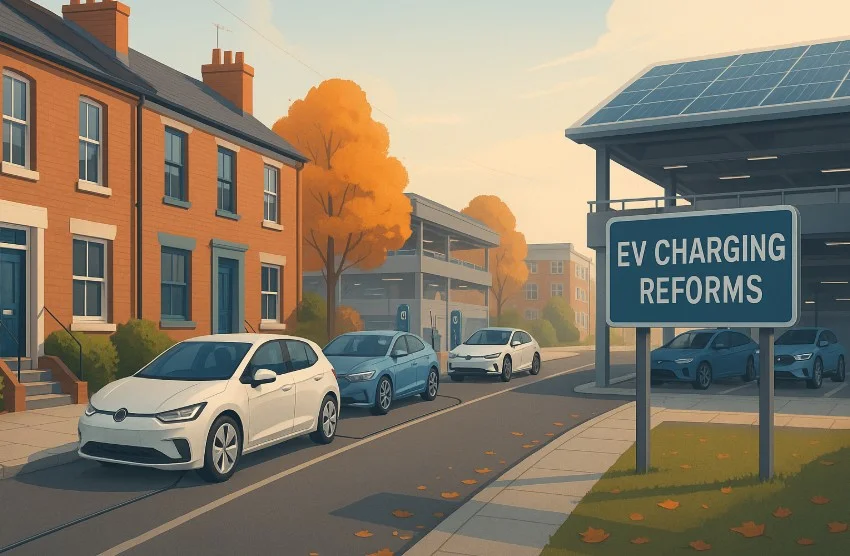
From removing the requirement for planning permission for pavement gullies to mandating chargers in newly built covered car parks, the reforms strive to create a level playing field for all drivers.
How Could These Reforms Impact Renters and Flat-Dwellers?
If you rent a property or live in a flat without a driveway, you’re probably familiar with the challenges of home charging. Until now, your only option may have been relying on public charging stations, which are not only less convenient but also significantly more expensive.
The new reforms offer a major step forward. Renters and leaseholders could soon be allowed to install charging solutions more easily, without needing costly and complex planning permission. The government also plans to protect tenants from landlords who might charge inflated electricity rates for home charging.
By equalising access to EV infrastructure, these reforms could eliminate one of the last major obstacles to ownership for millions across the UK.
Will You Still Need Planning Permission to Install EV Chargers Without a Driveway?
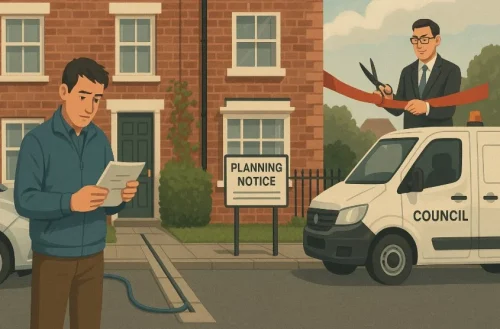
One of the most impactful proposals in this reform package is the potential removal of planning permission for installing cross pavement charging solutions, making it far easier for households without driveways to charge at home.
Current Application Barriers and Fees
As it stands, residents must often apply to both the County Council Highways Authority and their District Council Planning Team.
This dual application process is not only time-consuming but can cost upwards of £528. It requires complex architectural drawings, maps, and in some areas, even wildlife impact assessments.
Proposed Policy Changes to Simplify Installations
The government is now considering eliminating these requirements altogether for certain approved charging solutions, like discreet pavement gullies. This could reduce the upfront cost by up to £250, making installations more feasible and accessible for everyday motorists.
If implemented fully, the policy could dramatically expand the number of homes able to benefit from domestic-rate EV charging.
What Are Cross Pavement Charging Gullies and How Will They Help You?
Cross pavement charging gullies are discreet channels installed across pavements, allowing a charging cable to run safely from your home to your vehicle parked at the kerb.
These gullies offer a low-impact and highly practical charging solution for residents without private driveways.
Here’s what makes them so beneficial:
- Flush design prevents tripping hazards and complies with accessibility standards
- Aesthetically unobtrusive, preserving the look of residential streets
- Simple to use, allowing everyday homeowners to manage EV charging easily
- Local authority-approved, with growing support for implementation
- Encourages adoption for those who previously had no feasible charging option
By avoiding above-ground wires and unsightly fixtures, they maintain the street’s appearance while providing a secure and compliant solution for at-home EV charging, especially for homes with no off-street parking
How Much Money Could You Save Under the New Charging Proposals?
One of the most compelling reasons to welcome these reforms is the potential for significant cost savings. Charging an EV at home using a domestic electricity tariff is far cheaper than public charging, especially during off-peak hours.
Cost Comparison Table: Public vs. Domestic Charging
| Charging Method | Cost Per Mile | Example Cost (London to Birmingham ~125 miles) |
| Domestic (Off-Peak Rate) | £0.02 | £2.50 |
| Public Charger (Standard) | £0.25 | £31.25 |
Application Savings: Renters and leaseholders could save up to £250 in planning fees alone, making the installation of a charger not just easier, but economically smarter.
Over the long term, access to lower domestic electricity rates for vehicle charging could save households hundreds of pounds per year, money that can be reinvested in other areas of daily life.
What Role Is Ofgem Playing in Regulating EV Charging Costs?
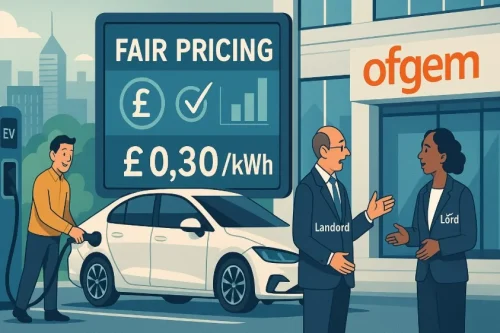
As part of the reforms, Ofgem will take on a broader role in ensuring that the EV charging market remains fair, especially for tenants and public users.
Their involvement focuses on two main areas:
- Tenant protection: Preventing landlords from charging more than the market rate for electricity used in EV charging
- Public-private pricing fairness: Working towards pricing alignment between public chargers (with higher VAT) and home chargers
Additionally, Ofgem will help:
- Ensure rapid and high-quality connections for new public chargepoints
- Oversee transparent billing standards, supporting consumer confidence
- Collaborate with local councils and energy providers to keep public infrastructure expansion cost-effective
This enhanced oversight ensures that the UK’s transition to electric transport is not only accessible but also economically fair for all types of users.
How Will These Reforms Affect Public and Street Charging Infrastructure?
While at-home charging is a priority, the government hasn’t ignored the need for a more robust public charging network. The reforms include mandatory installation of EV chargers in new covered car parks, including multi-storey facilities and underground lots.
These provisions aim to ensure that as EV numbers grow, the infrastructure to support them keeps pace.
Expected Public Charging Network Expansion:
| Metric | Value |
| New public chargers funded (next phase) | 100,000+ |
| Investment announced | £381 million |
| Number of chargers currently available | 86,021 (UK-wide) |
By expanding public infrastructure and streamlining approvals, the government hopes to reduce what many call “charging anxiety”, the fear of running out of battery without a charger nearby.
Are These Reforms Enough to Tackle ‘Charging Anxiety’ Across the UK?
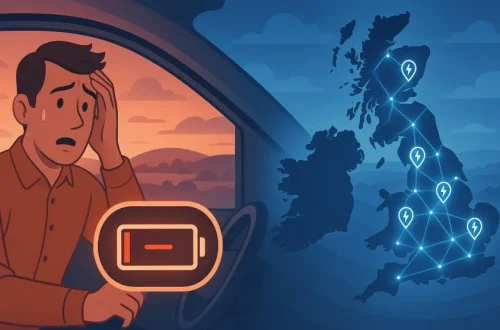
The reforms represent significant progress, but they are not a silver bullet. Charging anxiety still lingers, especially in rural areas where charger density is low or in communities where local authorities lag in implementation.
That said, recent progress has been substantial. The UK currently leads Europe in EV market performance, with a 30% year-on-year increase in EV sales. Coupled with initiatives like the Electric Car Grant (ECG) and now these infrastructure-focused reforms, the landscape for EV drivers is becoming far more encouraging.
The success of these policies will largely depend on speed of execution by local councils, cooperation from landlords, and engagement from private sector operators.
What Do These Reforms Mean for the Future of EV Ownership in the UK?
For many potential EV drivers, these reforms could be the final nudge needed to make the switch. When combined with the existing £650 million Electric Car Grant and local authority funding for charging infrastructure, the government’s package forms a strong foundation for a sustainable EV ecosystem.
From job creation in green tech to expanded consumer access and stronger regulatory oversight, the direction of travel is clear: EVs are no longer a futuristic concept but an everyday reality, and now, they’re more inclusive than ever before.
These charging reforms are more than policy updates. They represent a paradigm shift, one that acknowledges the real-life constraints of renters and urban dwellers and offers practical, affordable, and fair solutions to help Britain transition to a cleaner transport future.
Conclusion
The UK’s electric vehicle charging reforms mark a pivotal step towards a more inclusive and accessible EV future.
By cutting red tape, reducing costs, and expanding infrastructure, these changes aim to empower more people, especially renters and those without driveways, to make the switch to electric with confidence.
As the country accelerates towards a greener transport system, these reforms could be the spark that drives broader adoption and long-term sustainability across the nation.
Frequently Asked Questions
What is the Electric Car Grant (ECG) and how does it relate to charging reforms?
The ECG provides discounts of up to £3,750 on select electric car models. While it’s focused on reducing purchase costs, it complements the charging reforms by making EV ownership more affordable overall.
How can leaseholders request EV charger installations under the new rules?
Leaseholders will benefit from simplified processes and reduced costs. Though local councils will still manage approvals, reforms aim to cut red tape and make it easier to gain permission.
Are landlords legally allowed to charge more than market rates for EV charging?
Not under the new proposals. The reforms will give Ofgem the authority to prevent landlords from inflating electricity costs for tenants using EV chargers, ensuring fair and transparent pricing.
What are some discreet charging options for homes without driveways?
Cross pavement charging gullies are the primary discreet option. These are flush installations that allow cables to run safely from the home to the vehicle across the pavement.
How long does it currently take to get planning permission for EV chargers?
The existing process can be slow and expensive, often involving two separate council applications. The new reforms aim to speed this up significantly, especially for straightforward installations.
Will every new parking space be required to include a charger?
Not all, but any new covered car parks, like multi-storeys or underground facilities, will be required to install EV chargers as part of their infrastructure moving forward.
Is there any government support for local councils to implement these reforms?
Yes. A £25 million funding scheme is already supporting local authorities in installing discreet charging solutions, with additional investment of £381 million earmarked for public infrastructure.