




Table of Contents
Direct Answer: To check if you have points on your driving licence in the UK, use the official GOV.UK “View or share your driving licence information” service. You can check your penalty points, endorsements, disqualifications, vehicle categories and licence status online.
You will usually need your driving licence number, your National Insurance number and the postcode shown on your driving licence. If your licence was issued in Northern Ireland, use the NI Direct driving licence service instead of the GOV.UK DVLA service.
In the UK, the official spelling is “driving licence”, although many people search online for “driving license points”.
Key Takeaways:
- You can check your driving licence points online using the official GOV.UK service if your licence was issued in England, Scotland or Wales.
- You need your driving licence number, National Insurance number and the postcode on your licence.
- The online record shows penalty points, endorsements, disqualifications and vehicle categories you are allowed to drive.
- New drivers can have their licence revoked if they get 6 or more points within 2 years of passing their first driving test.
- Most drivers may face disqualification if they get 12 or more penalty points within 3 years.
- Endorsements normally stay on your driving record for either 4 years or 11 years, depending on the offence.
- Most expired endorsements are removed automatically when they are no longer valid.
- If endorsement details are wrong, you normally need to contact the court that convicted you, not only the DVLA.
- Drivers in Northern Ireland should use the official nidirect service because the DVLA GOV.UK service is for licences issued in England, Scotland and Wales.
What Does It Mean to Have Points on Your License?

Penalty points are added to your driving record when you are convicted of, or accept responsibility for, certain motoring offences. These offences are also known as endorsements.
An endorsement is an offence record added to your driving licence. Penalty points are the number of points attached to that offence. In everyday language, people often use “points” and “endorsements” to mean the same thing, but technically, the endorsement is the official record and the points are part of that record.
Common reasons for penalty points include speeding, using a handheld mobile phone while driving, driving without insurance, careless driving, failing to stop after an accident and failing to comply with traffic signs.
How to Check if I Have Points on My License Online?
The easiest way to check driving licence points is to use the official GOV.UK service called “View or share your driving licence information”.
This service can be used by drivers whose licence was issued in England, Scotland or Wales. It allows you to view your driving record and check whether you have active penalty points or disqualifications.
Step-by-Step Process
- Go to the official GOV.UK “View or share your driving licence information” service.
- Enter your driving licence number.
- Enter your National Insurance number.
- Enter the postcode shown on your driving licence.
- Open your driving record.
- Check the section that shows penalty points, endorsements or disqualifications.
- Review the offence code, number of points, offence date and removal date.
This is the safest method because it uses official DVLA records. Avoid third-party websites that claim to check your licence points unless you are sure they are legitimate and necessary.
What Details Do You Need to Check Your Driving License Points?
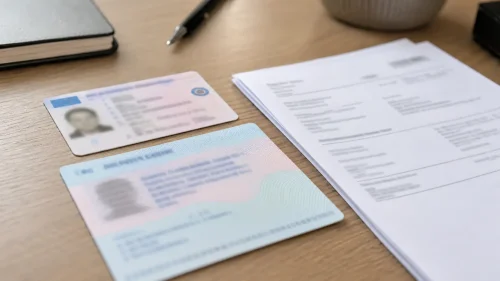
Before using the online service, keep the correct details ready. The information must match the details held on your DVLA driving record.
| Detail Needed | Why It Is Needed |
| Driving licence number | Identifies your individual driving record |
| National Insurance number | Helps verify your identity |
| Postcode on your licence | Confirms the address linked to your licence |
If your postcode has changed and your driving licence has not been updated, you may have difficulty accessing your record. You should keep your licence details up to date to avoid problems with identity checks, insurance and official correspondence.
Where Can You Find Your Driving License Number?
Your driving licence number is printed on your photocard driving licence. It is usually a 16-character code made up of letters and numbers.
If you cannot find your licence number, check your photocard carefully before trying to access the GOV.UK service. Entering the wrong number can prevent you from logging in.
What Will Your Driving License Record Show?
Your online driving record gives a clear overview of your current driving status.
It can show:
- Active penalty points
- Endorsement codes
- Details of motoring offences
- Dates when endorsements were added
- Dates when endorsements may be removed
- Driving disqualifications
- Vehicle categories you are allowed to drive
- Licence validity and status
- A check code you can share with a third party
The check code is useful if an employer, insurer or car hire company needs to verify your driving record. It allows them to check the relevant licence information securely without you sending screenshots or exposing unnecessary personal information.
Common Offences and Typical Penalty Points
Different offences carry different penalty points. The number of points depends on the offence code, the seriousness of the incident and whether the matter is dealt with by a fixed penalty or court.
| Offence Type | Typical Penalty Points |
| Speeding | 3 to 6 |
| Using a handheld mobile phone while driving | Usually 6 |
| Driving without insurance | 6 to 8 |
| Careless driving | 3 to 9 |
| Failing to stop after an accident | 5 to 10 |
| Dangerous driving | 3 to 11 |
| Failing to identify the driver | 6 |
These are typical ranges. Some offences can also lead to a fine, court appearance or disqualification from driving.
How Do Penalty Points Affect Your Driving Licence?

Penalty points can affect your legal right to drive, insurance costs and employment opportunities. The more points you have, the higher the risk of serious consequences.
Points can affect you in several ways:
- You may become closer to the 12-point disqualification threshold.
- Your car insurance premium may increase.
- Employers may question your suitability for driving-related roles.
- Car hire companies may refuse a booking or apply extra checks.
- New drivers may lose their licence after reaching 6 points within the first 2 years.
Checking your licence regularly helps you understand your current position before renewing insurance, applying for a driving job or hiring a vehicle.
How Many Points Can You Get Before a Driving Ban?
For most drivers in Great Britain, getting 12 or more penalty points within 3 years can lead to disqualification under the totting-up rules. The court decides the length of the ban based on the circumstances.
| Driver Situation | Points Threshold | Possible Outcome |
| Standard driver | 12 or more points within 3 years | Possible driving ban |
| New driver | 6 or more points within 2 years of passing first test | Licence revoked |
| Serious offence | Varies by offence | Court, ban or immediate disqualification possible |
A standard totting-up ban can last 6 months if you receive 12 or more penalty points within 3 years. Longer bans may apply if you have previous disqualifications.
New Driver Rules: Why Do 6 Points Matter?
New drivers face stricter rules. If you get 6 or more penalty points within 2 years of passing your first driving test, your licence can be cancelled or revoked.
This does not only apply to points received after passing the test. Points from a provisional licence can carry over to the full licence if they have not expired.
For example, if a learner driver already has 3 points on a provisional licence and receives another 3 points after passing, this could take them to 6 points within the new-driver period.
If your licence is revoked as a new driver, you usually need to apply for a new provisional licence and retake both the theory and practical driving tests before getting a full licence again.
How Long Do Points Stay on Your Driving Record?
Endorsements usually stay on your driving record for either 4 years or 11 years, depending on the offence.
For many common offences, endorsements stay on the record for 4 years. These are usually valid for the first 3 years. More serious offences, such as drink-driving, drug-driving and certain offences involving death by careless driving, can stay on the record for 11 years and may be valid for longer.
| Offence Type | How Long It May Stay on Record | Valid Period |
| Many standard motoring offences | 4 years | First 3 years |
| Serious drink, drug or death-related offences | 11 years | First 10 years |
The date used for the retention period can depend on the offence. Some endorsements run from the date of offence, while others run from the date of conviction.
Active Points vs Expired Endorsements
Active points still count towards disqualification thresholds. Expired endorsements no longer count in the same way, but they may still appear on your record until the full retention period ends.
For example, a 4-year endorsement may be valid for the first 3 years but remain visible on the record for 4 years.
This distinction matters because:
- Courts may consider valid endorsements in certain circumstances.
- Insurers or employers may be able to see endorsements during the period they remain on the record.
- A point may stop counting before the endorsement fully disappears.
Do not assume an expired endorsement is invisible immediately. Always check your official record and answer insurer or employer questions honestly.
Can You Remove Points From Your Licence Early?
You cannot normally pay to remove valid penalty points from your driving record. Most expired endorsements are removed automatically when they are no longer valid.
If you believe the endorsement is incorrect, you should challenge or correct the underlying record rather than trying to remove valid points early.
What Should You Do if Your Points or Endorsement Details Are Wrong?
If your driving record shows incorrect endorsement details, act quickly. Incorrect information can affect your insurance, employment and ability to drive legally.
In most cases, GOV.UK guidance says you should contact the court that convicted you if the endorsement details are wrong. The DVLA records the information, but the court is responsible for the conviction details.
Steps to Take
- Check the offence code, date and number of points carefully.
- Identify the court linked to the conviction.
- Contact the court and explain the error.
- Keep evidence, letters, emails and reference numbers.
- Recheck your GOV.UK driving record after the correction has been processed.
If the issue relates to your personal details, such as your name or address, you may need to update your driving licence information separately.
Can You Check Licence Points Without the Internet?
Yes. If you cannot use the online service, you can contact the DVLA by phone. GOV.UK also explains that you can get a licence check code over the phone.
This may be useful if:
- You cannot access the online service.
- Your identity details are not being accepted.
- You need help understanding your record.
- You do not have reliable internet access.
Postal options may also be available for some licence enquiries, but they are usually slower than checking online.
What About Northern Ireland Driving Licences?

The GOV.UK DVLA service is for driving licences issued in England, Scotland and Wales. If your driving licence was issued in Northern Ireland, you should use the official NI Direct service.
The nidirect service allows Northern Ireland drivers to view their driving record, check penalty points or disqualifications, and create a licence check code.
This is important because Northern Ireland uses the Driver and Vehicle Agency rather than the DVLA for its own driving licence records.
When Should You Check Your Driving Licence Points?
You should check your driving licence points whenever your driving record could affect a practical or legal decision.
Useful times to check include:
- Before renewing car insurance
- Before applying for a driving-related job
- Before hiring a car or van
- After receiving a fixed penalty notice
- After a court hearing for a motoring offence
- Before travelling abroad if you may need to drive
- After moving house or updating your licence details
- If you are a new driver and already have points
Checking your record regularly helps you avoid surprises and gives you time to correct mistakes before they cause bigger problems.
Can Points Increase Car Insurance Costs?

Penalty points can increase car insurance costs because insurers may treat drivers with endorsements as higher risk. The effect depends on the offence, number of points, insurer, policy type and how recently the offence happened.
You should answer insurance questions accurately. Do not rely only on whether points are active. Some insurers ask about motoring convictions or endorsements within a specific period, so read the wording carefully.
If you are unsure what to declare, ask the insurer directly before buying or renewing a policy.
Can Employers Check Your Driving Licence Points?
Employers cannot check your driving record without permission. However, if driving is part of your job, they may ask you to provide a licence check code.
This is common for:
- Delivery drivers
- HGV drivers
- Taxi and private hire drivers
- Company car users
- Van drivers
- Field service workers
- Sales roles involving regular driving
A check code lets the employer view relevant driving licence information securely and helps confirm that you are legally allowed to drive the required vehicle category.
Conclusion
Checking if you have points on your driving licence is a simple but important step for every UK driver. The official GOV.UK service lets drivers in England, Scotland and Wales check penalty points, endorsements, disqualifications and licence status online. Northern Ireland drivers should use the NI Direct service.
Regular checks help you stay compliant, avoid unexpected insurance problems and understand whether you are close to a disqualification threshold. This is especially important for new drivers, who can lose their licence after reaching 6 points within 2 years of passing their first test.
For the most accurate information, always use official government services and keep your licence details up to date.
Frequently Asked Questions
How do I check if I have points on my license in the UK?
Use the official GOV.UK “View or share your driving licence information” service if your licence was issued in England, Scotland or Wales. You need your driving licence number, National Insurance number and postcode.
Is “license” or “licence” correct in the UK?
In UK English, “licence” is the noun and “license” is the verb. Official UK government pages use “driving licence”. However, many people search online using the spelling “driving license”.
Is checking my driving licence points free?
Yes, the official GOV.UK driving licence information service is free to use for eligible GB licence holders.
Can I check someone else’s licence points?
You cannot access someone else’s personal driving information without permission. A driver can create a licence check code and share it with an employer, insurer or car hire company.
Do points on a provisional licence carry over?
Yes. Unexpired penalty points on a provisional licence carry over to the full licence after passing the driving test.
What happens if a new driver gets 6 points?
A new driver can have their licence revoked if they get 6 or more points within 2 years of passing their first driving test. They may need to apply for a new provisional licence and retake both driving tests.
How many points cause a driving ban?
Most drivers can face disqualification if they get 12 or more penalty points within 3 years. The court decides the final outcome and length of ban.
How long do points stay on a driving licence?
Many endorsements stay on the driving record for 4 years, while more serious offences can stay for 11 years. The valid period and removal date depend on the offence.
Can I pay to remove points from my licence?
No. Valid penalty points cannot normally be removed early by payment. Most expired endorsements are removed automatically when they are no longer valid.
Do I need to declare expired points to my insurer?
You should answer the insurer’s question exactly as asked. Some insurers ask about current points, while others ask about motoring convictions or endorsements over a set period. Check the wording carefully.
What should I do if my licence points are wrong?
If endorsement details are wrong, contact the court that convicted you. The DVLA records the information, but the court is usually responsible for correcting conviction details.
Sources:
- GOV.UK – View or share your driving licence information
- GOV.UK – How to check your endorsement details
- GOV.UK – How long endorsements stay on your driving record
- GOV.UK – Penalty points rules for new drivers
- GOV.UK – Driving disqualifications and penalty point limits
- GOV.UK – Endorsement codes and penalty points
- GOV.UK – Check someone’s driving licence information
- nidirect – View or share your Northern Ireland driving licence information
