



Table of Contents
True environmental responsibility cannot be achieved without technological solutions. Initiatives like carbon capture and renewable energy tend to dominate the headlines, but considerations such as sustainable lighting systems can be surprisingly effective.
In smart offices, industrial complexes, city streets and retail units, adaptive lighting systems make it possible to provide illumination only when and where it’s needed.
They can significantly reduce energy waste, lower carbon emissions, and reinvent the way businesses and institutions think about lighting.
How Adaptive Lighting Reduce Energy Waste in Smart Buildings?
Why Choose Sustainable Lighting?
Traditional lighting systems that use incandescent or fluorescent lamps are well-known for their inefficiency because so much of the electricity they consume is lost as heat.
This wastefulness is exacerbated by the practice of leaving them switched on in unoccupied rooms. Converting to LED lighting should be the foundation of any sustainable lighting plan.
LEDs consume up to 80% less power than conventional lamps and last much longer, reducing both energy consumption and the waste produced by frequent replacement. Even a shift on this scale can help to shrink the carbon footprint of every business.
However, it isn’t enough simply to replace your old lamps with LEDs. In order to reap the full rewards of energy-efficient lighting, they should be accompanied by adaptive and smart controls.
What Is Adaptive Lighting?
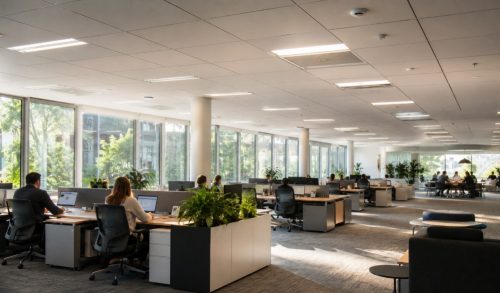
Energy-efficient lamps are just the start. Genuinely adaptive lighting systems use sensors, smart controls and automation to create dynamic lighting that changes according to usage and need.
Occupancy controls turn the lights down or off in empty rooms, daylight availability settings dim the lights when there is enough natural light, and programmed schedules keep lighting in alignment with working patterns.
As a result, lights are used only as much as necessary. This reduces energy consumption without compromising comfort, safety, or utility.
Saving on Energy and Protecting the Environment
Even before taking into account environmental considerations, the benefits of adaptive lighting are clear from its potential to slash energy use.
Research and real-life examples show how systems that use occupancy detection, daylight harvesting and automated dimming can reduce the amount of energy expended on lighting by anything from 20% to 80%.
Commercial buildings fitted with adaptive lighting can save up to 50% in energy costs compared to traditional lighting.
The cost savings are important, but there are even wider benefits, including:
- easing the demand for power
- reducing greenhouse gas emissions
- relieving the pressure on the nation’s energy infrastructure
By using more efficient lighting, businesses can contribute to the pursuit of climate goals and the increased resilience of energy systems in several notable ways.
- Adaptive lighting systems use electricity, which is often still produced from fossil fuels, more sparingly. This enables businesses to reduce their own carbon footprint and assist the national effort.
- The LEDs used in adaptive systems are more efficient and last longer. Reduced operating hours extend lamp life even further, thereby limiting waste and helping develop the circular economy.
- By concentrating light only where it’s needed and dimming it in unused areas, adaptive lighting can minimise the impact of light spill, glare and skyglow, which is beneficial to the health of employees, visitors and the immediate environment.
Adaptive lighting can improve working conditions by reducing glare and ensuring employees have the lighting they need to carry out their duties, thereby improving productivity.
From Speculative to Delivered
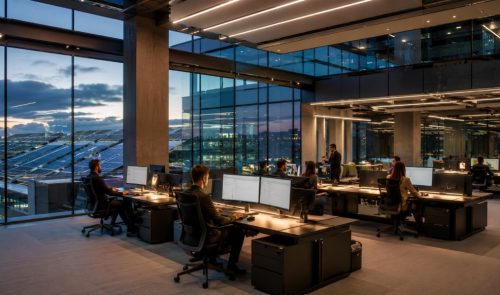
Smart sustainable lighting might once have seemed to be no more than a technological aspiration, like electronic devices controlled by the human voice.
These are now common in many homes and, in the same way, adaptive lighting is rapidly becoming a key feature in building design, construction and refurbishment.
It’s already possible to go much further by integrating these systems with renewable energy sources, such as solar or wind. The dream of buildings with 100% sustainable energy comes closer to reality every day.
London is already home to the UK’s first net-zero office building, the Forge, and similar advances have been made in the USA and China.
Smart lighting powered, even in part, by clean energy reduces dependence on non-renewable electricity and protects businesses from the risk of energy shortages.
Smart Lighting as Part of Your Sustainability Strategy
Smart, adaptive lighting is an important element of sustainability strategies. By intelligently matching the output of lighting to operational imperatives, such systems dramatically reduce energy waste, cut emissions, lower operating costs, and improve the working environment.
Sustainable lighting is no longer a desirable option but a necessity and a smart investment in both the planet and the future of any business.
