



Table of Contents
To check if a company is VAT registered in the UK, you normally need its VAT registration number. The quickest method is to use HMRC’s official Check a UK VAT Number service.
This service can confirm whether a UK VAT number is valid and may show the registered business name and address. However, it cannot confirm VAT registration by company name alone.
For most UK businesses, VAT registration becomes compulsory when taxable turnover goes over £90,000 in a 12-month period. This means not every legitimate company will be VAT registered. A small business may legally trade without a VAT number if it is below the registration threshold and has not registered voluntarily.
Quick Answer: How to Check if Company is VAT Registered?
You can check if a company is VAT registered by:
- Asking the company for its VAT registration number.
- Looking for the VAT number on its invoice, receipt, website or order paperwork.
- Using HMRC’s official UK VAT number checker.
- Checking whether the company name and address match the VAT record.
- Keeping a copy or reference of the VAT check for your records.
A VAT number check helps confirm whether a supplier can legally charge VAT. It also helps protect your business from invoice errors, VAT fraud, and problems when reclaiming VAT.
What is a VAT Number?
VAT stands for Value Added Tax. A VAT number, also called a VAT registration number or VRN, is issued when a business registers for VAT with HMRC.
A standard UK VAT number usually has 9 digits and may be shown with the GB prefix. For example, a supplier may display the number as GB followed by 9 digits.
Some Northern Ireland businesses involved in EU goods trade may use an XI prefix for relevant transactions. HMRC explains that Northern Ireland businesses may need to use the XI prefix before their usual VAT registration number when operating under the Northern Ireland rules for EU goods trade.
Why Checking a VAT Number Matters?
Checking a VAT number is important because it helps confirm whether the business charging VAT is actually registered for VAT. If a supplier incorrectly charges VAT or uses a false VAT number, your business may face issues when trying to reclaim VAT.
A valid VAT invoice is especially important for business-to-business transactions. HMRC states that VAT invoices must include details such as the supplier’s name, address and VAT registration number, along with invoice dates, supply details and VAT amounts where applicable.
A VAT check is useful when:
| Situation | Why It Matters |
| You are dealing with a new supplier | Confirms whether the VAT number is valid |
| You receive a large VAT invoice | Reduces the risk of reclaiming VAT incorrectly |
| A company seems suspicious | Helps verify basic tax registration details |
| You trade with EU or Northern Ireland businesses | Confirms whether the correct VAT system applies |
| You need accounting records | Provides evidence that a check was carried out |
How to Check a UK VAT Number with HMRC?
The official way to check a UK VAT number is through HMRC’s online VAT number checker.
You will need the VAT number before using the service. HMRC clearly states that the service cannot be used to search by company name. This means you cannot simply type a company’s name into the tool to find its VAT number.
Steps to Check a UK VAT Number
- Ask the business for its VAT registration number.
- Go to HMRC’s official Check a UK VAT Number service.
- Enter the VAT number.
- Review the result.
- Check whether the business name and address match the supplier you are dealing with.
- Save the result or reference for your records.
HMRC’s VAT number checking API is designed to support due diligence on VAT-registered businesses. It can check whether a UK VAT number is registered, show the related business name and address, and provide a reference number to prove the check was made.
Can You Check if a Company is VAT Registered by Company Name?
In most cases, no. HMRC’s UK VAT checker requires a VAT number. It does not allow users to check VAT registration by searching only by a company name.
If you only have the company name, you can:
| What You Can Do | What It Tells You |
| Check the company’s invoice | May show the VAT number |
| Check the company website | Some businesses publish VAT details |
| Ask the supplier directly | Best way to get the correct VAT number |
| Search Companies House | Confirms company existence, not VAT registration |
| Review business paperwork | Quotes, receipts and contracts may include VAT details |
Companies House is useful for checking company information such as registered office address, filing history, officers, accounts and charges. However, it should not be treated as a VAT registration checker.
Is Every UK Company VAT Registered?
No. Not every UK company is VAT registered.
A business must register for VAT if its taxable turnover goes over £90,000 in a 12-month period. A business may also register voluntarily even if its turnover is below the threshold.
This is important because a company without a VAT number is not automatically suspicious. It may simply be below the VAT threshold or may only sell VAT-exempt goods or services.
When Should You Be Concerned About a VAT Number?
You should take extra care if:
| Warning Sign | What to Do |
| The VAT number is missing from a VAT invoice | Ask the supplier for a corrected invoice |
| The VAT number is invalid | Ask the supplier to confirm the number |
| The name or address does not match | Request clarification before paying VAT |
| The supplier charges VAT but says it has no VAT number | Do not treat it as valid VAT without evidence |
| The invoice looks edited or inconsistent | Carry out additional checks before reclaiming VAT |
An invalid VAT number does not always mean fraud. It may be a typing error, a recently issued number, a formatting issue or an outdated invoice. However, you should not ignore the problem.
What to Do if a VAT Number is Invalid?
If HMRC’s VAT checker says the number is invalid, follow these steps:
- Recheck the number for typing mistakes.
- Remove unnecessary spaces or prefixes if needed.
- Ask the supplier to confirm the VAT number.
- Request a corrected VAT invoice if the invoice is wrong.
- Keep written evidence of your request.
- Do not reclaim VAT until you have a valid VAT invoice.
If the supplier cannot provide a valid VAT number but has charged VAT, you should treat the invoice carefully and seek professional accounting advice before reclaiming VAT.
Can You Use VIES to Check a UK VAT Number?
For most UK VAT numbers, you should use HMRC’s UK VAT checker, not VIES.
The EU’s VIES tool is used to check VAT numbers for EU cross-border trade. The European Commission explains that VIES retrieves VAT data from national VAT databases when a search is made.
After Brexit, standard GB VAT numbers are not generally checked through the EU VIES system. However, Northern Ireland businesses using the XI prefix for relevant EU goods transactions may appear under the “XI Northern Ireland” option in VIES.
The European Commission confirms that VAT numbers starting with the XI prefix can be checked under the Northern Ireland entry.
VAT Number vs Company Registration Number
A VAT number is not the same as a company registration number.
| Term | Issued By | Purpose |
| VAT Number | HMRC | Shows VAT registration |
| Company Registration Number | Companies House | Identifies a limited company |
| Unique Taxpayer Reference | HMRC | Used for tax records |
| Employer PAYE Reference | HMRC | Used for payroll and PAYE |
| EORI Number | HMRC | Used for customs and international trade |
A company may have a Companies House registration number but no VAT number. This can happen if the company is not VAT registered.
What Details Should a VAT Invoice Include?
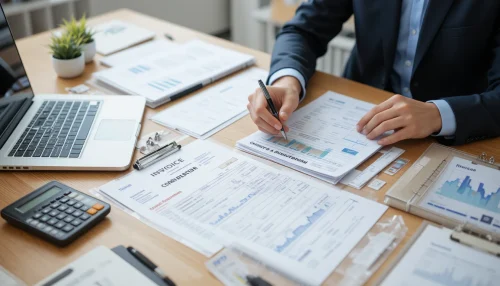
A VAT invoice should include key information that allows the customer and HMRC to understand the transaction clearly.
A VAT invoice normally includes the following:
| VAT Invoice Detail | Why It Matters |
| Supplier name and address | Identifies the business charging VAT |
| Supplier VAT number | Confirms VAT registration |
| Unique invoice number | Supports accounting records |
| Invoice date | Shows when the invoice was issued |
| Supply date or tax point | Shows when goods or services were supplied |
| Description of goods or services | Explains what was supplied |
| Net amount | Shows the amount before VAT |
| VAT rate and VAT amount | Shows how VAT was calculated |
| Total amount payable | Shows the final amount due |
HMRC guidance confirms that invoices must include details such as a unique identification number, company details, customer details, description, invoice date, supply date, VAT amount where applicable and total amount owed.
Can You Reclaim VAT if the Supplier’s VAT Number is Wrong?
You should not reclaim VAT from an invoice unless you have a valid VAT invoice from a VAT-registered supplier.
If the VAT number is wrong, missing or does not match the supplier, ask for a corrected invoice before reclaiming VAT. HMRC requires VAT information to be shown correctly on invoices, including the VAT number and VAT amount where VAT applies.
This is especially important for high-value purchases, ongoing supplier contracts and business expenses where VAT recovery is material.
How to Check a Company Before Doing Business?

A VAT check is useful, but it should not be the only due diligence step. VAT registration confirms tax registration status, but it does not guarantee that a business is financially stable, trustworthy or legally compliant in every area.
Before working with a new supplier, consider checking:
| Check | Purpose |
| VAT number | Confirms VAT registration |
| Companies House record | Confirms company existence and filing history |
| Registered office address | Checks whether details match invoices |
| Website and contact details | Confirms business consistency |
| Reviews and trading history | Helps identify reputation concerns |
| Payment terms | Reduces financial risk |
| Contract details | Protects both parties |
Companies House provides free company information, including registered office address, filing history, accounts, officers and charges.
Common Misunderstandings About VAT Registration
A company is not fake just because it is not VAT registered
A business may legally operate without VAT registration if it is below the VAT registration threshold or does not need to register.
A VAT number does not prove a company is safe
A valid VAT number confirms VAT registration, but it does not prove that a business is reliable, solvent or free from risk.
Companies House is not a VAT checker
Companies House can confirm company information, but it is not the official tool for checking VAT registration.
VIES is not the main checker for GB VAT numbers
For UK VAT numbers, HMRC’s VAT checker should be used. VIES is mainly for EU VAT numbers and Northern Ireland XI VAT numbers in relevant cases.
FAQs
How do I check if a company is VAT registered in the UK?
You can check if a company is VAT registered by asking for its VAT number and entering it into HMRC’s official UK VAT number checker. The service can confirm whether the number is valid and may show the registered business name and address.
Can I check VAT registration without a VAT number?
Usually, no. HMRC’s VAT checker requires a VAT number and cannot search by company name alone.
Is a company legally required to show its VAT number on invoices?
If a VAT-registered business issues a VAT invoice, the invoice must include the supplier’s VAT registration number and other required invoice details.
What is the UK VAT registration threshold?
The UK VAT registration threshold is more than £90,000 in taxable turnover over a 12-month period. Businesses must register if they exceed this threshold.
Does every limited company have a VAT number?
No. A limited company may be registered at Companies House but may not be VAT registered. VAT registration depends on taxable turnover, voluntary registration, and the nature of the business.
What should I do if a supplier gives an invalid VAT number?
Ask the supplier to confirm the number and provide a corrected VAT invoice. Do not reclaim VAT until you have a valid VAT invoice with correct details.
Can I use Companies House to check VAT registration?
No. Companies House can confirm company information such as address, officers, filing history and accounts, but it is not an official VAT registration checker.
Can I reclaim VAT from a supplier invoice?
You can usually reclaim VAT only if you are VAT registered, the purchase is for your business, and you have a valid VAT invoice from a VAT-registered supplier.
Sources
