



Table of Contents
A Suffolk used-car dealership has entered liquidation after less than two years in business, reportedly owing more than £50,000 to 17 creditors.
Car Station Suffolk Ltd, which sold second-hand vehicles from premises in Halesworth and online, began a creditors’ voluntary liquidation on 29 January 2026. Its official Companies House record continues to list the company’s status as “liquidation”. s filed during the insolvency process reportedly showed debts of £50,673.30 and no assets available for creditors.
The dealership’s collapse has consequently created uncertainty for suppliers, employees and anyone who may have had an unresolved transaction with the business. the public records reviewed for this article do not confirm how many people worked for the dealership, whether specific customers lost deposits or whether any vehicles remained undelivered. Those possible consequences should not be treated as established facts without further evidence.
Quick Answer: What Happened to the Suffolk Car Dealership?
Car Station Suffolk Ltd entered creditors’ voluntary liquidation on 29 January 2026 because the company could not continue paying its debts.
The business reportedly owed £50,673.30 to 17 creditors and recorded no available assets in its statement of affairs. Richard Cacho was appointed as the insolvency practitioner overseeing the liquidation.
Customers who believe they are owed money should preserve their transaction records, contact the liquidator and investigate whether they can claim through their credit card provider, bank or vehicle finance company.
Employees who lost their jobs or are owed wages may be eligible to claim through the government’s Redundancy Payments Service.
Which Suffolk Car Dealership Has Gone Bust?
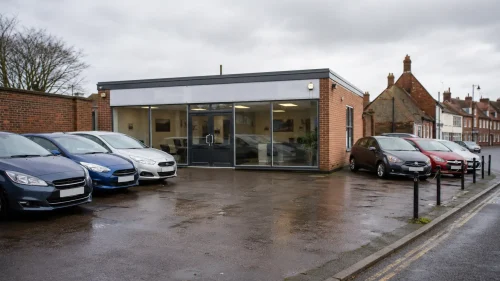
The company involved is Car Station Suffolk Ltd, company number 15755347.
The dealership was incorporated on 2 June 2024 and registered its main business activity as the sale of used cars and light motor vehicles. Before the liquidation, it operated from Halesworth Road in Halesworth, Suffolk. stered office was later changed to 64–66 Westwick Street in Norwich, the address recorded for the insolvency practitioner.
Companies House shows that the company remains in liquidation rather than dissolved. A company in liquidation still legally exists while the liquidator investigates its affairs, deals with claims and completes the winding-up process.
When Did Car Station Suffolk Enter Liquidation?
The company entered creditors’ voluntary liquidation on 29 January 2026.
Companies House records Richard Cacho as the practitioner appointed on the same date. The appointment paperwork and statement of affairs were filed on 6 February 2026, while the extraordinary resolution to wind up the business was filed on 9 February. orts have referred to 6 February as the liquidator’s appointment date. The official insolvency page, however, gives 29 January as both the commencement of winding up and the appointment date.
This distinction matters because a Companies House filing date is not always the same as the date on which the event legally occurred.
The key publicly recorded developments from incorporation to liquidation.
The company was incorporated as a business involved in the sale of
used cars and light motor vehicles.
Eddy Lee Ellis was appointed as a director of Car Station Suffolk Ltd.
Jacob Ladd resigned as a company director before the later insolvency
proceedings.
The company entered creditors' voluntary liquidation and an
insolvency practitioner was appointed.
The liquidator appointment and statement of affairs were filed with
Companies House.
The registered office was changed to the Norwich address associated
with the insolvency practitioner.
Timeline dates should be checked against the latest
Companies House filing history
before publication.
Car Station Suffolk liquidation timeline
Car Station Suffolk Ltd was formed
A new director was appointed
The founding director resigned
Creditors' voluntary liquidation began
Liquidation documents were filed
The company address changed
How Much Money Did the Dealership Owe?
Car Station Suffolk reportedly owed a combined £50,673.30 to 17 creditors.
Reporting based on the company’s filed statement of affairs said most of the creditors were trade creditors and that the document recorded no company assets.
This would indicate a substantial shortfall between the amount owed and the money initially expected to be available for distribution. Assets’ figure in an initial statement of affairs does not necessarily prove that nothing will ever be recovered. A liquidator can investigate bank transactions, stock movements, unpaid invoices, company property and other potential recoveries.
Nevertheless, unsecured creditors should prepare for the possibility that they may receive only a small proportion of their claim—or no payment at all.
Why Did Car Station Suffolk Go Bust?
The available evidence establishes that the business was unable to pay its debts, but it does not identify one definitive commercial reason for the failure.
A creditors’ voluntary liquidation is generally used when a company is insolvent, enough shareholders agree to wind it up and an authorised insolvency practitioner is appointed. ion Suffolk entered liquidation before filing its first annual accounts. Those accounts, covering the period ending 30 June 2025, had been due on 2 March 2026 and are now marked overdue.
There is consequently no publicly filed annual profit-and-loss account showing the company’s:
- sales revenue;
- gross profit margins;
- stock-finance costs;
- operating expenses;
- borrowing commitments; or
- cash-flow position.
It would be speculative to attribute the collapse to weak car sales, falling used-car values, finance costs, management decisions or wider economic conditions without stronger evidence.
The failure nevertheless comes at a time when dealerships and other automotive companies are adapting to changing consumer behaviour, new technology and regulatory pressures. The Business View has explored some of those developments in its report on how electric vehicles and Brexit are changing the UK car industry.
More broadly, the closure demonstrates why cash-flow monitoring and contingency planning remain important as UK businesses respond to changing market conditions.
What Does Liquidation Mean for Customers?
Liquidation normally means the company stops trading and the appointed practitioner assumes control of its affairs.
According to the government’s explanation of what a liquidator does, the practitioner may deal with outstanding contracts, sell company assets, investigate the directors’ conduct, keep creditors informed and distribute any available funds in the required order. s may be affected if they:
- paid a deposit but did not receive a vehicle;
- paid for a vehicle that was never delivered;
- were waiting for an agreed refund;
- had a vehicle awaiting repair;
- bought a dealership-backed warranty;
- left a part-exchange vehicle with the business; or
- were owed compensation following a complaint.
There is no public confirmation that any of these circumstances occurred at Car Station Suffolk. The steps below are general guidance for anyone who believes they have an unresolved claim.
What Should Affected Customers Do Now?
1. Gather All Available Evidence
Customers should keep copies of every document connected with the purchase or proposed purchase, including:
- the vehicle advertisement;
- sales invoice or order form;
- deposit receipt;
- card or bank statement;
- finance agreement;
- emails, messages and call records;
- warranty documents;
- vehicle registration number;
- part-exchange paperwork; and
- evidence of any promised refund or repair.
The clearer the evidence, the easier it should be for the liquidator, bank, lender or card provider to assess the claim.
2. Confirm the Company’s Legal Status
Customers should use the official Car Station Suffolk Companies House page rather than relying solely on old advertisements, social-media pages or third-party business listings.
Companies House warns that it does not verify the accuracy of every document filed, but its record remains the primary public source for the company’s status and insolvency filings.
3. Contact the Liquidator
Richard Cacho is named by Companies House as the practitioner handling the case.
A customer who is owed money should ask the practitioner:
- how to submit a creditor claim;
- what evidence is required;
- whether the claim has already been recorded;
- whether any relevant stock or customer vehicle is held; and
- how future updates will be communicated.
The government explains that people owed money can register as a creditor by contacting the person handling the liquidation. Registration does not guarantee payment, but it allows the claimant to be formally recorded and kept informed. heck Section 75 protection
A customer who paid by credit card may be protected under Section 75 of the Consumer Credit Act when the cash price of the individual item was more than £100 and no more than £30,000.
Importantly, the whole purchase does not need to have been paid by credit card. Paying only a deposit on the card can sometimes provide protection for the full qualifying purchase.
The government-backed MoneyHelper service provides a detailed explanation of Section 75 and chargeback protection. ity depends on the contractual relationship and payment method, so customers should give their card provider complete information rather than assuming a claim will automatically succeed.
5. Ask the Bank About Chargeback
Customers who paid by debit card—or who cannot use Section 75 can ask their bank whether a chargeback claim is possible.
Chargeback is not a statutory right in the same way as Section 75. It operates under card-scheme rules and often has time limits. MoneyHelper says a claim will commonly need to be made within 120 days, although the point from which the period begins may depend on when the goods or services were expected. s should contact their bank promptly and retain a record of the request.
6. Contact the Vehicle Finance Provider
Where a car was bought using hire purchase, personal contract purchase or another regulated finance agreement, the customer should contact the lender named in the contract.
The dealer and finance company are normally separate legal entities. The dealership’s liquidation does not necessarily end the finance agreement, but the lender may have responsibilities where the vehicle was not supplied, was misrepresented or did not meet the required standard.
Customers should continue following the terms of their finance agreement unless the lender advises them otherwise. Simply stopping payments could create arrears and affect their credit record.
7. Check Who Issued the Warranty
Not every warranty ends when a dealership closes.
A manufacturer’s warranty or independently administered third-party warranty may continue because another organisation is responsible for the cover.
A warranty funded and administered only by the insolvent dealership may be more difficult to enforce. Customers should check the certificate for the provider’s legal name and contact details.
Citizens Advice offers further guidance on what consumers can do when a company stops trading. happens to staff when a dealership goes into liquidation?
The company’s public filings do not state how many employees worked for Car Station Suffolk or confirm the number of redundancies.
In a typical liquidation, employees may lose their jobs because the company stops trading. They could also be owed wages, holiday pay, commission, notice pay or pension contributions.
Eligible employees can apply to the Insolvency Service for certain payments when their employer cannot pay them.
Under the current government guidance for employees of an insolvent company, qualifying claims can include:
- statutory redundancy pay;
- up to eight weeks of unpaid wages and certain contractual payments;
- up to six weeks of holiday pay;
- statutory notice pay; and
- some outstanding pension contributions through the relevant process. ndancies taking place on or after 6 April 2026, the weekly payment cap is £751. The earlier £719 cap applies to qualifying redundancies before that date. Entitlement depends on employment status, service length, age and contract terms.
The online redundancy and insolvency payment service explains how eligible workers can begin a claim.
Contractors and genuinely self-employed workers are normally treated differently from employees. They may need to register as unsecured creditors for unpaid invoices.
The Business View has previously examined the wider human impact of corporate workforce reductions in its coverage of why companies make large-scale job cuts.
Find the right next steps
Choose your situation to generate a practical action checklist following the Car Station Suffolk liquidation.
Which situation applies to you?
Select one option below.
Select one of the options above to begin.
Will Creditors Get Their Money Back?
Repayment appears uncertain.
The reported statement of affairs showed more than £50,000 owed and no recorded assets. If that position remains unchanged, unsecured creditors may receive little or nothing.
However, the liquidator must still investigate the company and determine whether anything can be recovered. Potential recoveries could include outstanding customer payments, stock, refunds, company property or transactions that can legally be challenged.
Any money recovered will be distributed according to insolvency rules. Liquidation expenses and certain priority claims may be paid before ordinary unsecured creditors.
Customers and suppliers should therefore register their claims but should not interpret registration as a guarantee of repayment.
What Happens Next to Car Station Suffolk LTD?
The company will remain in liquidation while the practitioner:
- verifies creditor claims;
- investigates the company’s financial affairs;
- determines whether assets or funds can be recovered;
- reports to creditors where required;
- distributes any available money; and
- completes the statutory closure process.
After the liquidation is concluded, the company can be removed from the Companies House register and dissolved.
Until that happens, Companies House may continue displaying the business as in liquidation even though it is no longer trading.
What Can Other Car Buyers Learn From the Closure?
The liquidation offers several practical lessons for consumers making high-value vehicle purchases.
Buyers should check the legal identity of the dealership, retain copies of advertisements and contracts, understand who provides the warranty and consider the protection associated with different payment methods.
Paying at least part of a qualifying purchase directly by credit card may provide additional protection under Section 75. Customers using finance should also confirm the lender’s identity and understand how complaints will be handled.
Drivers should separately check their insurance position before collecting or moving a newly purchased vehicle. The Business View’s guide to insurance that may allow a driver to use another car explains why “driving other cars” cover should never be assumed.
No payment method eliminates every risk. Good records, prompt action and early contact with the relevant financial provider can nevertheless improve a customer’s position when a dealer unexpectedly closes.
Conclusion
The news that a Suffolk car dealership has gone bust centres on Car Station Suffolk Ltd, which entered creditors’ voluntary liquidation on 29 January 2026 after less than two years in business.
The dealership reportedly owed £50,673.30 to 17 creditors and recorded no assets in its statement of affairs. Its collapse leaves suppliers facing uncertain recoveries and creates potential concerns for any customers or employees with unresolved claims.
There is no verified public figure for the number of affected customers or staff. Anyone who believes they are owed money should rely on the official insolvency record, preserve all supporting documents and contact the liquidator promptly.
Customers should also investigate Section 75, chargeback, vehicle-finance and warranty protections, while eligible former employees can seek support through the Insolvency Service.
Editorial accuracy note: This report distinguishes confirmed Companies House information from figures reported by specialist media. It does not allege misconduct by the company’s directors or liquidator.
Frequently Asked Questions
Which Suffolk Car Dealership Has Gone Bust?
Car Station Suffolk Ltd, a used-car dealership formerly operating from Halesworth Road in Halesworth, entered creditors’ voluntary liquidation in January 2026.
Is Car Station Suffolk Still Trading?
The company is listed by Companies House as being in liquidation. No evidence reviewed for this article establishes that it has resumed trading.
When Did Car Station Suffolk Enter Liquidation?
The creditors’ voluntary liquidation began on 29 January 2026. Related appointment documents were filed at Companies House on 6 February 2026.
How Much Did Car Station Suffolk Owe?
The company reportedly owed £50,673.30 to 17 creditors, according to reporting based on its statement of affairs.
Did Customers Lose Their Deposits?
No public record reviewed for this article confirms how many customers, if any, lost deposits. Anyone with an unresolved payment should contact the liquidator and the relevant bank, card provider or finance company.
Can a Customer Claim a Car Deposit Through Section 75?
Possibly. Section 75 may apply when a qualifying item costs more than £100 and up to £30,000 and at least part of the payment was made directly by credit card. Individual circumstances and the payment chain can affect eligibility.
Can Debit-card Customers Request Chargeback?
They can ask their bank about chargeback. It is a card-scheme process rather than a statutory right, and deadlines may apply.
Does a Vehicle Warranty End When the Dealership Closes?
Not necessarily. Manufacturer-backed and separately administered warranties may continue. The customer should identify the legal provider named on the warranty certificate.
What Can Former Employees Claim?
Eligible employees may be able to claim statutory redundancy pay, unpaid wages, holiday pay and notice pay through the government’s Redundancy Payments Service. Eligibility and payment limits apply.
Who is Handling the Car Station Suffolk Liquidation?
Companies House names Richard Cacho as the appointed insolvency practitioner.
Will the Dealership’s Creditors Be Repaid?
Repayment is uncertain. The reported absence of assets suggests unsecured creditors may receive little or nothing, although the liquidator must investigate whether funds can be recovered.
Will Car Station Suffolk Reopen?
There is no confirmed indication that the existing limited company will reopen. It remains in liquidation, and the normal outcome of a completed liquidation is dissolution.
