



Table of Contents
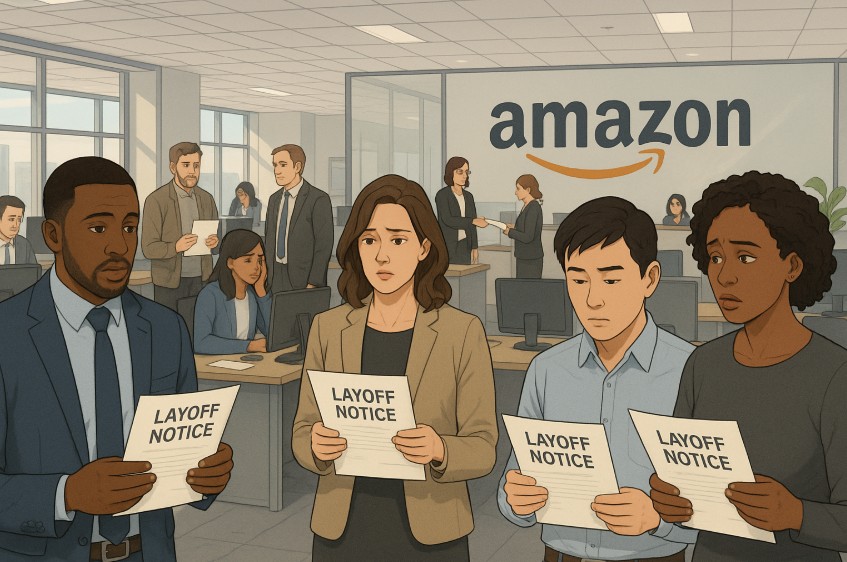
The global technology sector continues to experience major transformations, and few events underline this shift more starkly than the ongoing layoffs at Amazon.
As one of the world’s largest employers and a digital commerce pioneer, Amazon’s decision to reduce its workforce in 2025 has triggered widespread discussion about automation, corporate strategy, and the future of work.
This blog explores the reasons behind Amazon’s latest workforce reduction, its implications for employees and the wider industry, and what these developments signify for the future of employment in the technology sector.
What Triggered Amazon’s Latest Round of Layoffs in 2025?
The most recent layoffs at Amazon in 2025 stem from a combination of technological, strategic, and economic factors. At the core lies a broader restructuring plan aimed at increasing operational efficiency, improving profit margins, and aligning the company with long-term technological goals.
Senior leadership pointed to the need to eliminate redundancies, streamline processes, and reduce costs across various departments.
While Amazon has long been recognised for its aggressive hiring patterns, especially during the pandemic to support e-commerce growth, the slowdown in online retail demand post-COVID, coupled with rising operational costs and a stagnating global economy, has led to a recalibration of workforce priorities.
How Is Artificial Intelligence Influencing Job Reductions at Amazon?

AI has been central to Amazon’s evolution in recent years, driving not only product recommendations and logistics but also reshaping its internal workflows and organisational structure. The 2025 layoffs are notably linked to the integration of advanced AI systems that have significantly altered workforce requirements.
AI-Driven Automation in Operations
From warehousing to customer service, AI systems are increasingly performing roles previously handled by humans. Warehouse robotics, autonomous delivery mechanisms, and predictive inventory tools have collectively minimised the need for manual intervention in day-to-day operations.
Impact on White-Collar Roles
Surprisingly, it’s not just warehouse or fulfilment roles being impacted. A significant number of corporate and middle management positions have also been eliminated.
AI is now performing functions such as data analysis, report generation, and even certain HR tasks. These technologies allow decisions to be made faster, with greater consistency, and fewer human errors.
Efficiency vs. Employment
While AI adoption offers efficiency and innovation, it also brings challenges in workforce management. The replacement of jobs by AI technologies is a stark reminder of the complex relationship between digital transformation and employment sustainability.
Why Are Middle Management Roles Most Affected?
Among the most heavily affected are mid-level managerial positions, particularly those involved in operations, logistics, and project oversight. The rationale behind this lies in Amazon’s evolving corporate structure, where decision-making is becoming increasingly centralised and data-driven.
Traditional managerial roles, those involved in coordinating teams, overseeing deliverables, and managing daily operations. are being gradually replaced by automated dashboards and AI-led coordination systems.
In other words, what once required a team of supervisors can now be managed through intelligent platforms providing real-time data, alerts, and performance metrics.
Additionally, the company is seeking to flatten its organisational hierarchy. Fewer layers of management mean more direct communication between leadership and operational teams, which Amazon believes will result in faster execution and improved agility.
What Does This Mean for Amazon Warehouse and Operations Staff?
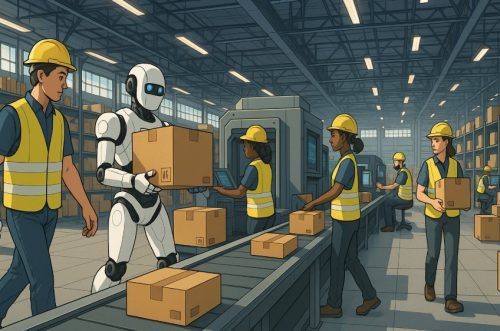
The impact of Amazon’s layoffs goes beyond office walls, warehouse and fulfilment staff are facing a new kind of automation challenge. As the company pushes for greater efficiency, advanced robotics are becoming an integral part of its logistics network.
Key Automation and Workforce Shifts:
- AI-powered robots now handle sorting, packaging, and item transport at record speed.
- These systems operate 24/7, boosting productivity and reducing downtime.
- Automation cuts human error but reduces the need for manual labour.
- Amazon has launched limited upskilling programmes to help displaced staff transition.
While technology continues to reshape logistics, not all employees will benefit equally. The company’s investment in reskilling shows promise, but large-scale job reductions highlight the growing divide between human workers and intelligent machines in modern fulfilment centres.
Is Amazon’s Cost-Cutting Strategy a Long-Term Transformation?
The ongoing layoffs are not just short-term responses to economic pressure. They are part of a broader, strategic cost-cutting initiative designed to future-proof Amazon’s business model.
Cost-efficiency is becoming a cornerstone of Amazon’s operational philosophy. By reducing dependency on human labour, especially in areas where automation can perform equal or better, Amazon is positioning itself to reduce overhead costs and increase scalability.
Human Labour vs AI-Based Efficiency:
| Aspect | Human Labour | AI/Automation |
| Operating Hours | 8–10 hours/day | 24/7 operation |
| Error Rate | Medium | Low |
| Cost (per task) | Higher | Lower (long-term) |
| Scalability | Moderate | High |
| Training Requirement | Continuous | One-time deployment |
This table illustrates why automation is increasingly favoured from a business efficiency standpoint.
How Is Amazon Communicating with Laid-Off Employees?

Internal communication regarding layoffs is being handled through direct emails and one-on-one sessions with affected employees. These messages acknowledge the contributions of employees while detailing severance packages and available support services.
According to employee accounts, Amazon has offered transition assistance, including extended healthcare benefits, access to job placement services, and financial packages based on tenure. However, the effectiveness of these efforts has varied depending on department and location.
The HR approach reflects a balance between corporate responsibility and strategic necessity. While the tone has generally been empathetic, some employees report feeling blindsided by the abruptness of the decisions.
What Are Industry Experts Saying About Amazon’s Workforce Reduction?
The layoffs at Amazon are part of a wider trend across the tech sector. Experts point to multiple converging pressures: slowing consumer demand, rising inflation, global economic uncertainty, and a maturing technology sector that is now prioritising profitability over growth.
Many analysts view Amazon’s moves as a warning to other large corporations reliant on expansive workforces. As AI and automation become increasingly integrated into daily operations, companies must rethink human capital strategy, employee retention, and future skills development.
Tech Sector Layoffs – A Comparison (2025):
| Company | Number of Layoffs | Primary Reason |
| Amazon | 20,000+ | Automation, Restructuring |
| TechCo X | 15,000 | Market Slowdown |
| SoftTech Y | 8,000 | AI Integration |
| DataCorp Z | 10,500 | Cost Optimisation |
This table highlights that Amazon is not alone in its workforce reductions, although its scale and reasoning are particularly significant.
How Might These Layoffs Shape Amazon’s Future?

Amazon’s current strategy indicates a long-term commitment to operating leaner, smarter, and faster. The integration of AI is not merely an enhancement; it is becoming the backbone of future operations.
By reducing its reliance on a large workforce, Amazon aims to become more resilient to external economic shocks, better positioned to innovate rapidly, and capable of managing its vast supply chain with unprecedented efficiency.
However, there are risks. Employee morale, company culture, and public perception may be affected. Over-automation could also lead to service gaps, particularly in areas where human intuition and empathy remain irreplaceable.
What Lessons Can Other Companies Learn from Amazon’s Layoff Strategy?
Amazon’s approach offers several insights for other corporations considering similar transformations:
- Data-Driven Decision-Making: The use of AI to identify inefficiencies has allowed Amazon to make informed, strategic reductions.
- Balancing Growth with Profitability: Transitioning from aggressive hiring to strategic pruning demonstrates a shift toward sustainable growth.
- Importance of Communication: Transparent and empathetic internal communications, while not perfect, are essential during such transitions.
For companies observing Amazon’s transformation, the key takeaway is clear: embrace innovation, but prepare your workforce for the changes that innovation brings.
Conclusion
The question of why is Amazon laying off employees reveals a much larger narrative about the future of work, the rise of artificial intelligence, and the challenges of maintaining growth in a rapidly evolving economy.
While these layoffs are difficult for those affected, they reflect a global shift towards digital transformation and efficiency-driven leadership.
As Amazon continues to reinvent itself, businesses worldwide are watching closely, learning not only from its innovation but also from the human and organisational impact of these transformative decisions.
Frequently Asked Questions
How many employees has Amazon laid off in 2025?
Amazon has laid off tens of thousands of employees across various departments, including corporate, logistics, and warehouse operations, as part of its 2025 restructuring plan.
Are warehouse roles safe from future job cuts at Amazon?
While not all warehouse roles are at risk, automation trends suggest that many manual roles could be reduced over time unless they are transitioned into tech-enabled positions.
Is Amazon hiring in other departments while laying off staff?
Yes, Amazon continues to hire in areas such as AI development, cloud computing, and robotics, indicating a shift in workforce focus rather than a complete freeze.
What severance benefits are offered to affected employees?
Severance packages typically include financial compensation based on tenure, extended health coverage, and access to career transition services.
How do Amazon layoffs compare to other tech companies in 2025?
Amazon’s layoffs are among the largest in the tech industry this year, driven largely by automation and restructuring, whereas others are focused on market corrections or financial pressures.
Are remote Amazon employees affected by the layoffs?
Yes, remote workers across several departments, particularly in non-technical roles, have been impacted as part of the broader cost-optimisation strategy.
Could more job cuts be expected in 2026 at Amazon?
While no official plans have been announced, continued automation and economic volatility could lead to further adjustments in 2026.
