




Table of Contents
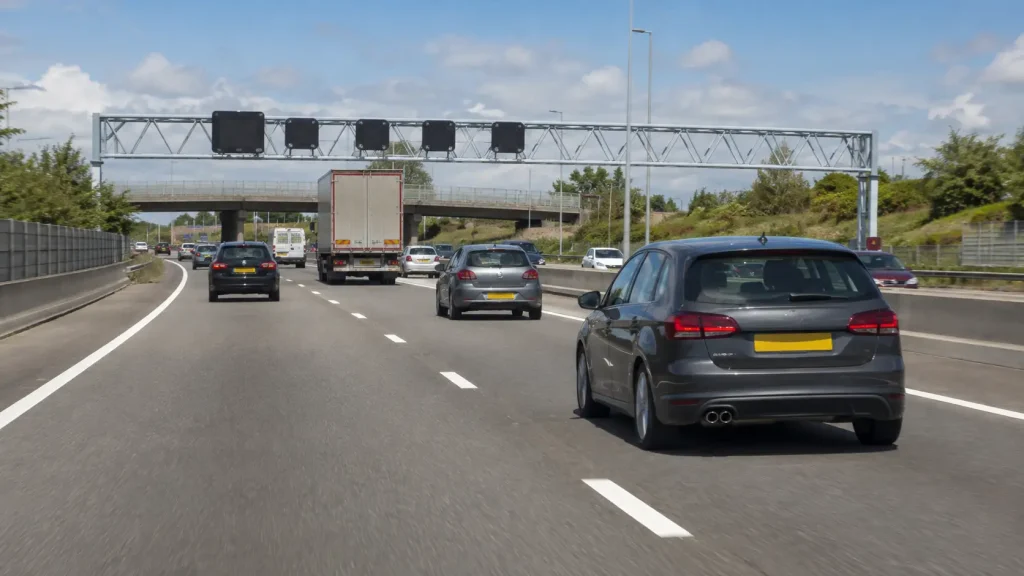
On a three-lane UK motorway, the right-hand lane should normally be used only to overtake traffic travelling in the middle lane. A driver should enter it only after checking that the lane is clear and the manoeuvre is safe. After overtaking, the driver should return to the middle lane and then move back to the left-hand lane when it is safe.
The right-hand lane is not a “fast lane”, and travelling at the speed limit does not give a driver the right to remain there. Certain vehicles, including vehicles towing trailers and many heavy goods vehicles, are normally prohibited from using it on a motorway with three or more lanes.
The Highway Code’s motorway rules make the basic principle clear: keep left unless overtaking. Applying that rule can still require judgement when drivers encounter lorries, congestion, joining traffic, variable limits, roadworks or lane closures. This guide explains how to use lane three safely and when it should be avoided.
What Is the Purpose of Each Motorway Lane?
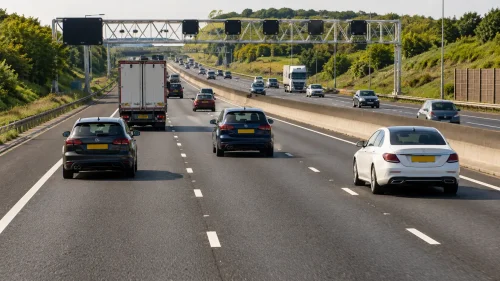
On a standard three-lane motorway, the lanes are normally counted from left to right. Lane one is the left-hand lane, lane two is the middle lane and lane three is the right-hand lane.
| Lane | Normal Purpose | What the Driver Should Do Next |
| Left-Hand Lane | Normal driving when the road ahead is clear | Remain here unless overtaking or following signs |
| Middle Lane | Overtaking slower traffic in lane one | Return to lane one when safely past |
| Right-Hand Lane | Overtaking traffic in lane two | Return to lane two and then move left when safe |
A driver travelling on a clear motorway should therefore use lane one. Remaining in lane two or lane three without overtaking can reduce road capacity, interrupt traffic flow and cause other motorists to make unnecessary lane changes.
Lane three is next to the central reservation. The amber studs beside it mark the right-hand edge of the carriageway; they do not mark a special high-speed lane. The Business View’s guide to amber reflective studs on motorways explains the full colour system.
When Would You Use the Right-Hand Lane on a Three-Lane Motorway?
The right-hand lane, also known as lane three, should normally be used only when a driver needs to overtake traffic travelling in the middle lane. It should not be treated as a permanent high-speed lane or used simply because the vehicle is travelling at the motorway speed limit.
The following situations explain when using the right-hand lane may be appropriate.
Overtaking Slower Traffic in the Middle Lane
The most common reason for entering the right-hand lane is to overtake a slower vehicle travelling in lane two.
For example, a driver may already be using the middle lane to pass a lorry in lane one. If the driver then approaches a slower car or van in the middle lane, they may move into lane three, provided that the lane is clear and the manoeuvre can be completed safely.
Before changing lanes, the driver should check the road ahead, use the mirrors, assess the blind spot where necessary, signal clearly and confirm that there is a safe gap. The lane change should be smooth and should not force another road user to brake or alter course.
Once the slower vehicle has been passed, the driver should return to lane two and then move back into lane one when it is safe.
Completing a Continuous Overtaking Manoeuvre
A driver may temporarily remain in the right-hand lane while passing several closely spaced vehicles.
For instance, if lane two contains a continuous line of slower traffic with no sufficiently large gap between the vehicles, repeatedly moving left and right may create unnecessary risk. In this situation, the driver may complete the continuous overtake before returning towards the left.
However, a distant vehicle further ahead does not justify remaining in lane three indefinitely. When a safe and useful gap becomes available, the driver should move back into lane two and then lane one where appropriate.
Following Lane-Specific Signs and Road Markings
Overhead signs, temporary road layouts or carriageway markings may direct traffic into particular lanes. This can happen near motorway junctions, route divisions, roadworks or temporary traffic-management schemes.
A driver may therefore need to use the right-hand lane when it is the correct lane for the intended route. Signs should be read early so that the driver can move across gradually rather than making a sudden or last-minute lane change.
Lane directions do not remove the need to check mirrors, signal and leave adequate space around other vehicles.
Moving Away From a Closed Motorway Lane
A driver may need to enter the right-hand lane when another lane is being closed, provided that lane three remains open and the move can be made safely.
For example, if warning signs indicate that lane two is closing, traffic may be directed into lane one or lane three. Drivers should follow the displayed arrows and overhead signals in good time.
A red X above lane three means that lane three itself is closed. It must not be entered or used to pass queuing traffic, even when the road ahead appears clear.
Maintaining Position in Slow-Moving Congestion
During heavy congestion, all three motorway lanes may be occupied and moving at similar speeds. A driver already in the right-hand lane may remain there while following the flow of traffic.
This is different from remaining in lane three unnecessarily on a clear road. Once congestion eases and safe gaps become available, normal lane discipline applies and the driver should move back towards the left.
Frequent lane changes in slow traffic rarely provide a meaningful advantage and may increase the risk of side-impact collisions.
Preparing for a Major Route Split
Some motorway interchanges divide traffic across several lanes, with the right-hand lanes continuing towards one destination and the left-hand lanes leading elsewhere.
In these circumstances, a driver may use lane three because it is the correct lane for the chosen route rather than because they are overtaking. The relevant destination signs and road markings take priority.
The driver should enter the correct lane early enough to avoid crossing several lanes close to the junction.
Returning Left After Using Lane Three
The right-hand lane should be left once the overtake or lane-specific requirement has ended. The driver should return to lane two when there is enough space to do so without cutting in front of the overtaken vehicle.
If lane one is also clear, the driver should continue moving left when safe. This progressive return helps maintain traffic flow and keeps the outer lanes available for overtaking.
A driver should not remain in lane three merely because they expect to overtake another vehicle much further ahead.
How Should a Driver Enter the Right-Hand Lane Safely?
A safe overtake begins before the vehicle crosses the lane marking. The driver should first decide whether overtaking is necessary and whether enough clear road exists to complete the manoeuvre without forcing anyone else to brake or change direction.
A sound sequence is:
- Look Well Ahead: Check for slower traffic, junctions, changing speed limits and lane closures.
- Check the Mirrors: Traffic may be approaching quickly from behind, particularly motorcycles.
- Check the Blind Spot if Needed: A brief sideways glance can confirm that no vehicle is hidden beside the car.
- Signal in Good Time: An indicator communicates intention but does not create priority.
- Move Smoothly Into a Safe Gap: Do not force another driver to slow down.
- Keep to a Legal, Suitable Speed: Overtaking does not permit speeding.
- Pass Without Cutting In: Leave adequate clearance before returning left.
Extra care is needed around HGVs. Large vehicles have extensive blind areas, create spray in wet weather and need more stopping distance. A driver should avoid lingering alongside a lorry and should not move back in so closely that the lorry driver loses a safe following gap.
When Should a Driver Return to the Left?
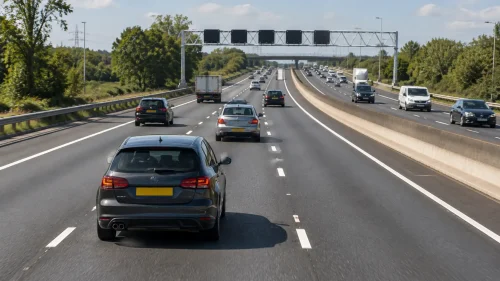
A driver should leave lane three once the vehicle being overtaken has been safely passed and a suitable gap is available in lane two. After returning to lane two, the driver should consider moving into lane one when the road ahead there is clear.
The move should not happen so early that it cuts across the overtaken vehicle. Equally, it should not be delayed merely because lane three feels convenient.
A driver may remain outside while passing a closely spaced line of vehicles. Repeatedly entering very small gaps and moving out again can create unnecessary risk. However, a slower vehicle far ahead is not a reason to occupy lane three indefinitely.
There is no universal number of metres that determines when to move back. Speed, traffic density and safe separation all matter. A practical question is whether the driver could return left, maintain a proper following distance and remain there for a meaningful period. If so, moving left is generally appropriate.
Is the Right-Hand Lane the Fast Lane?
No. “Fast lane” is an informal and misleading term. The right-hand lane is an overtaking lane, and the same displayed speed limit applies across all relevant lanes.
A driver may legally overtake at less than 70 mph where traffic, weather or a lower variable speed limit requires it. Conversely, travelling at exactly 70 mph does not justify remaining in lane three when lanes to the left are clear.
The speed limit is a maximum, not a target. Drivers must adjust their speed to visibility, traffic and road conditions. A lane change may be unsafe even when the vehicle is below the posted limit.
What Should a Driver Do About a Faster Vehicle Behind?
A driver should not speed, accelerate aggressively or enter an unsafe gap because another motorist is approaching quickly. The correct response is to complete the overtake calmly and move left as soon as it is safe.
The following driver must maintain a safe distance. Brake-checking, confrontation and sudden lane changes are dangerous. Proper lane discipline requires moving left when safe, but it does not require yielding to pressure from a tailgater.
Can Traffic Be Passed on the Left?
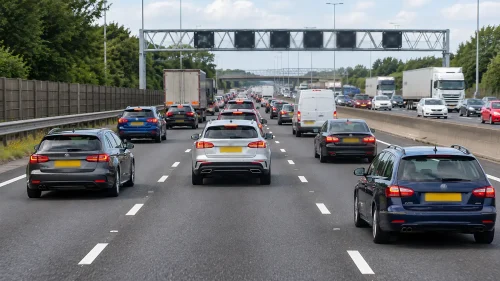
The Highway Code advises drivers not to overtake on the left or move into a lane on the left specifically to overtake. Congested traffic is different.
When adjacent lanes move at similar speeds, a left-hand lane may temporarily move faster than a lane to its right. A driver may continue with the traffic in the existing lane even when that means passing vehicles on the right.
The difference is between keeping pace during congestion and deliberately moving left, accelerating past another vehicle and weaving back out. Drivers should not weave between lanes to gain a small advantage.
When congestion clears, normal lane discipline resumes and drivers should move towards the left when safe.
Which Vehicles Must Not Normally Use Lane Three?
Rule 265 of the Highway Code restricts several vehicle categories from the right-hand lane of a motorway with three or more lanes, except in prescribed circumstances.
| Vehicle Type | Lane Three Normally Permitted? | Key Point |
| Car or motorcycle not towing | Yes, for overtaking | Return left after passing |
| Any vehicle drawing a trailer | No | Includes cars towing caravans or trailers |
| Goods vehicle above 7.5 tonnes maximum laden weight | No | Must remain in permitted lanes |
| Certain goods vehicles above 3.5 tonnes and up to 7.5 tonnes | No | Applies where a speed limiter is required |
| Certain passenger vehicles with more than eight passenger seats | No | Exact restriction depends on weight and speed-limiter requirements |
A car towing a caravan must not move into lane three merely because lane two contains slower traffic. Patience and suitable following distances are essential.
On steep routes, slower vehicles may be directed into climbing or crawler lanes. We explains where crawler lanes are found on UK motorways and how they support traffic flow.
Commercial operators and minibus drivers should check the current rules for the particular vehicle because weight, seating and speed-limiter classifications can be technical.
What Does a Red X Mean Above Lane Three?
A red X means the lane is closed. A driver must not continue beyond the signal in that lane. The closure may protect a broken-down vehicle, collision, debris, road workers or emergency responders even when the danger is not visible.
Drivers should follow advance warnings, check surrounding traffic and move safely into an open lane. They should not use the closed lane to pass queuing vehicles or wait until the final moment to force their way across.
The lane remains closed until a later signal indicates that it has reopened, normally by displaying an applicable speed limit or “END”. A blank gantry should not be assumed to cancel a red X already passed.
Temporary layouts may also include narrow lanes and contraflows. Drivers can read what to expect at a motorway contraflow system before travelling through major roadworks.
How Should Lane Three Be Used in Heavy Traffic?
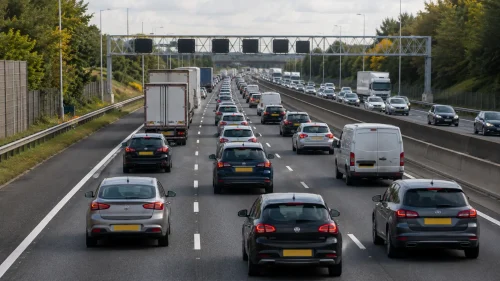
During slow congestion, all lanes may remain occupied. Drivers should stay in a suitable open lane, follow signs and avoid repeated changes for a minor advantage.
A motorist in lane three is not necessarily lane hogging when all lanes are moving at similar speeds. Once traffic clears, the driver should move back towards the left.
Near junctions, overhead signs should be read early because lane one may become exit-only. Checking route updates, such as The guide to M11 closures and diversions, can reduce sudden lane changes around planned works.
What Are the Most Common Lane-Three Mistakes?
Common errors include moving out too early, staying out too long, cutting back in too soon, failing to check the blind spot, lingering beside a lorry and exceeding the speed limit. Another serious mistake is assuming a red-X lane is usable because it appears clear.
National Highways’ lane-discipline guidance explains why unnecessary lane hogging disrupts traffic flow. Persistent or unsafe lane hogging can also be treated as careless driving. Police consider the full circumstances; presence in lane three alone does not show whether the driver was overtaking or following signs.
Could Misusing Lane Three Lead to a Penalty?
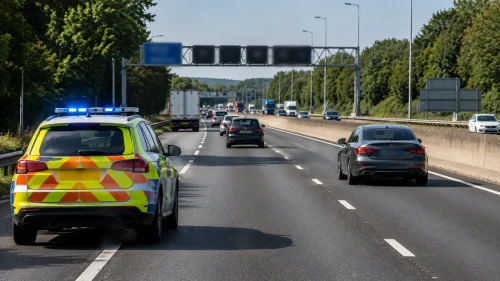
Unsafe or persistent lane hogging may amount to careless driving or driving without due care and attention. Police can issue a fixed penalty in appropriate cases, while more serious or contested matters may go to court.
Other behaviour may create separate offences, including speeding, driving in a red-X lane, ignoring traffic signs or driving dangerously. The outcome depends on the evidence and circumstances.
A motorist who needs to review their official driving record can use GOV.UK or read the guide on how to check driving-licence penalty points.
Final Answer
The right-hand lane should mainly be used to overtake vehicles in the middle lane. Before moving out, the driver must check ahead, use the mirrors, assess the blind spot, signal and confirm that a safe gap exists. After passing, the vehicle should return towards the left when safe.
Lane three is not a permanent fast lane. Drivers must obey speed limits, red X signals and restrictions applying to trailers and heavy vehicles. Good motorway driving is calm and predictable: keep left, leave space, overtake only when necessary and follow signs.
Frequently Asked Questions
When Should a Driver Use Lane Three?
Lane three should normally be used to overtake traffic in lane two. The driver should return left when safely past.
Can a Driver Stay in Lane Three at 70 MPH?
Not merely because the vehicle is travelling at 70 mph. The driver should use the left-hand lane when the road ahead is clear.
Can a Car Towing a Trailer Use Lane Three?
Normally no. A vehicle drawing a trailer must not use the right-hand lane of a motorway with three or more lanes, except in prescribed circumstances.
Is Passing on the Left Always Prohibited?
Drivers should not move left specifically to overtake. In congested conditions, they may keep pace in their lane even if it moves faster than traffic to the right.
Does a Red X Apply When the Lane Looks Clear?
Yes. The lane is closed beyond the signal, and hazards or workers may be further ahead.
Schema: